
The Elusive Nature of Truth: Why Absolute Certainty Is Impossible
 By Science not Scientism | MeditationTreks.com | April 2026
In a world flooded with AI-generated answers, viral “facts,” and endless debates, one question keeps echoing during quiet moments on the trail: What is truth, really?
At Meditation Treks, we guide people inward—not to claim absolute answers, but to sit comfortably with uncertainty. Because here’s the core premise we’re exploring in 2026: Absolute truth is pretty much impossible for humans in this existence. We can deduce, observe, test, and “go with” what feels true… but in the end, we’re all navigating a probabilistic reality. Even a 99.9% likelihood leaves a 0.1% crack wide enough for entire universes of possibility.
And as science itself admits, that crack is where wonder lives.
Science Strives for Truth… But Calls It “Theory” for a Reason
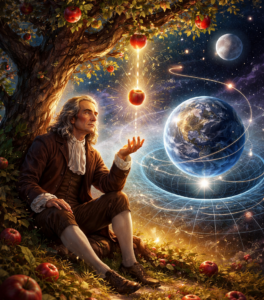 Walk outside right now and drop a rock. Gravity is observable. Yet physicists still call it the theory of gravity. Why? Because while we can predict it with stunning accuracy, no one has a fully provable, universally agreed-upon explanation of how it works at every scale.
The same goes for the theory of relativity. Einstein’s equations transformed our understanding of space and time, yet they break down at quantum levels. We keep refining, never finalizing.
This isn’t failure—it’s honesty. Science is the most rigorous tool we have for approximating truth, but it’s built on probability, not perfection.
Contrast that with the phrase “settled science.” It’s a total oxymoron. In 2020–2021, this slogan was weaponized to shame questions about experimental injections. Millions felt alienated, not because they were “anti-science,” but because they sensed the probabilistic nature of emerging data.
When institutions treat evolving knowledge as gospel, trust erodes. Real science thrives on anomalies, replication, and the humility to say, “We don’t know—yet.”
Anomalies Don’t Make You a “Conspiracy Theorist”—They Make You Curious
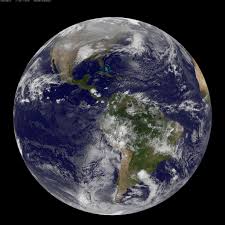
 Point out weird inconsistencies and watch the labels fly. Question the official globe-Earth model? Suddenly you’re accused of believing the planet is flat and domed. But that’s a false binary.
Consider a few observable anomalies:
- The ship-over-the-horizon test: Watch a vessel disappear hull-first with the naked eye. Grab a telescope—boom, it reappears. Globe theory says curvature hides it. Yet the optics work against that at certain distances.
- December solstice in the southern hemisphere: Flat-Earth models (like the popular UN azimuthal equidistant map) struggle to explain simultaneous sunlight at the tips of South America and Australia. Globe Earth explains it cleanly with axial tilt.
Neither side “proves” absolute truth. Globe theory wins on some observations; anomalies challenge it on others. The point isn’t picking a team. The point is staying open.
In meditation, we call this non-attachment to views. You notice the anomaly without needing to resolve it into dogma. That spacious awareness is freedom.
You Don’t Need a Grand Conspiracy—Just People “Going Along”
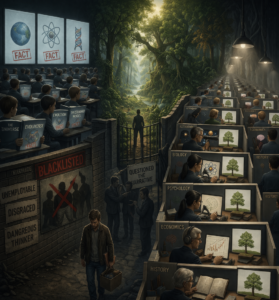 Many dismiss “conspiracy theories” by saying, “Too many people would have to be in on it!” But that misunderstands human systems.
You don’t need universal evil intent. You just need:
- Indoctrination through education (textbooks that present theories as facts)
- Blacklisting from livelihood (lose your job or reputation for questioning the narrative)
- Compartmentalization (each person sees only their delegated “tree” and never the forest)
This is how discussions around moon landings, 9/11, the pyramids’ true origins, JFK’s assassination, secret societies, and elite “play god” agendas persist. Rich families who’ve transcended money often chase god-like control through technology and policy—not cartoon villains, just powerful humans behaving like powerful humans.
The Simulation Hypothesis: The Probability That Offsets All Others
If there’s even a decent chance we’re living in a simulation, then mathematically, it undercuts every other probability. Because the entire game is coded on a lie.
Quantum weirdness, the fine-tuning of constants, and the sheer computational power of future civilizations all point toward it. If true, then gravity, history, conspiracies—even your meditation cushion—are pixels in someone else’s experiment.
And that’s liberating. It invites radical presence.
The Paradox of Occam’s Razor
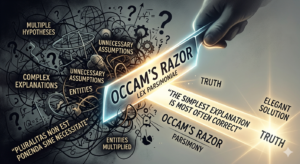 Occam’s Razor—“the simplest explanation is usually the best”—sounds wise. But it’s perception-based. To ancient humans staring at the flat horizon, a flat Earth was the simplest model.
Today, many still feel that way intuitively. The razor cuts both ways depending on what you’ve been conditioned to see as “simple.”
In meditation, we slice through this paradox by dropping all models. Just sit. Breathe. Notice.
Finding Peace in Probability: Your Inner Trek
So where does this leave us on the trail in 2026?
- Stop demanding absolute truth from a probabilistic universe.
- Use science as a flashlight, not a throne.
- Question boldly but gently—without needing to plant a flag.
- Let meditation be your daily practice of being with uncertainty.
At Meditation Treks, our guided sessions aren’t about escaping reality—they’re about meeting it exactly as it is: mysterious, beautiful, and never fully knowable.
The truth isn’t “out there” waiting to be conquered. The truth is within you.
Ready to trek inward?
Explore our Healing Breathwork programs or try a guided session tuned to Presence and Uncertainty.
Drop a comment below: What “settled” truth are you quietly questioning these days?